Why There's No New Punk

For most of music's history, the medium carried things that couldn't be said any other way. The anger that had nowhere else to go. The grief that couldn't be named in conversation. The political frustration of a generation that wasn't being heard anywhere else. Music named things. It gave shared form to experiences people were having privately. You can trace this through every era: soul during the civil rights movement, punk during the collapse of postwar optimism, hip-hop speaking for communities the mainstream had decided not to look at. This wasn't incidental to what music was. It was central to what music did.
But something has changed. Not recently, and not dramatically. The platforms that now carry music to most of the world read one signal: engagement. Whether you kept listening. Not what the music meant, not where it came from, not what it was trying to do. Just whether the audio kept running. Think about what the platform knows about you after a year of listening. It knows which songs you skipped after a few seconds and which ones you played twice in a row. It knows the patterns of your behavior, not the texture of your experience. What it does with that information shapes more of what you hear than any individual choice you make.
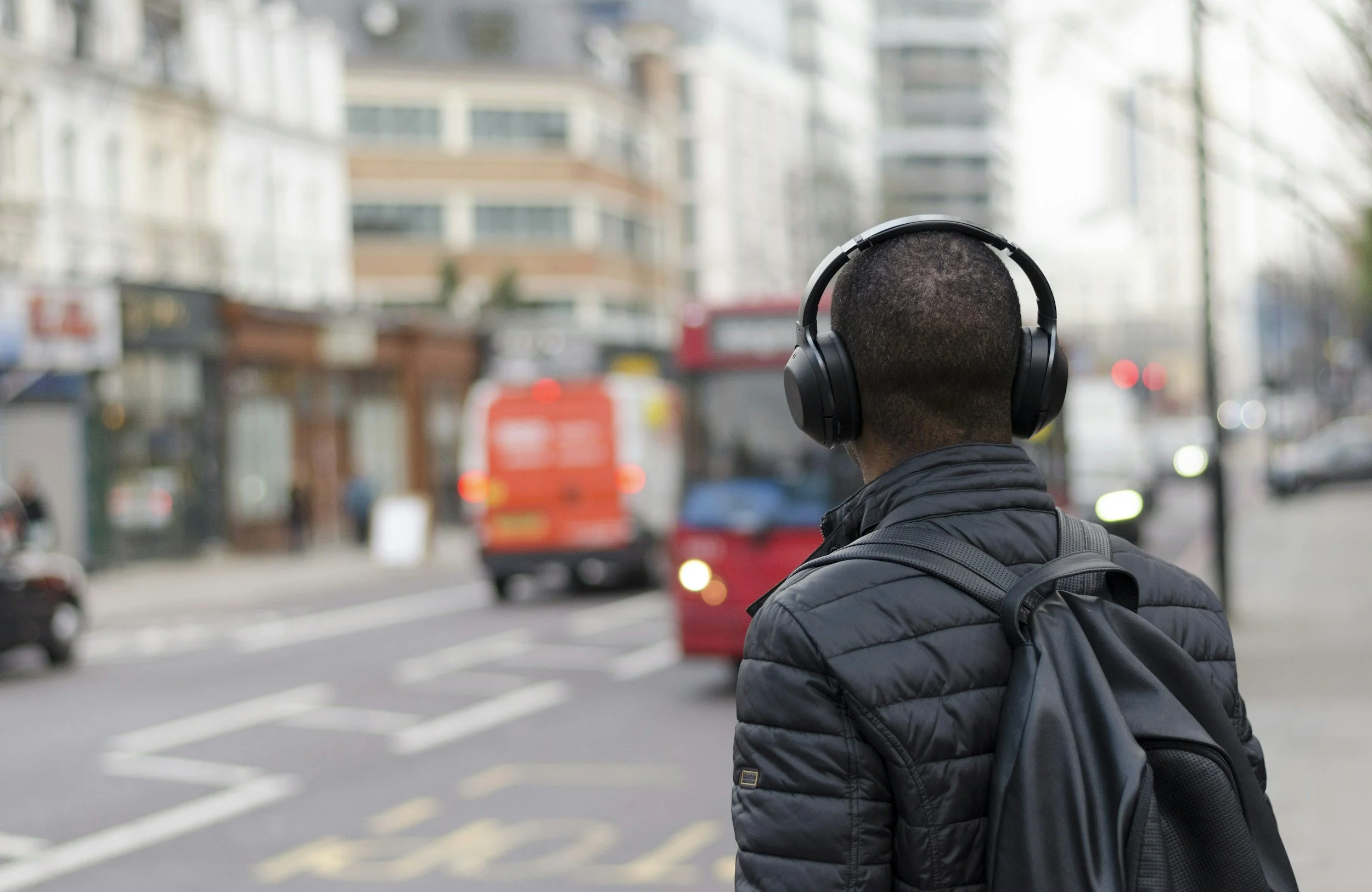
Most listening happens in the background. Not because people don't care, but because that's how music fits into daily life: the commute, the workday, the drive home. A song running in the background while you answer emails registers as engagement. The platform reads it as preference. It has no way to know you weren't really there. Most of the data the algorithm is built on came from exactly those moments.
The same phones that carry music have spent years competing for the attention music sometimes needs, and mostly winning. You're on your way to work, or at your desk with something else in front of you, and something comes on that doesn't immediately catch you. So you skip it. The platform reads that as information about the song. But it isn't. It's information about your attention at that moment. Music that hooks you in the first ten seconds does well in that context. Music that rewards patience, that needs you to be present before it gives anything back, gets a poor reading every time it reaches someone who wasn't really there. The platform can't tell the difference. It registers behavior. And over time, that feedback loop shapes what gets surfaced: music built to catch a distracted ear, to hook you before you skip. Not because that's what anyone asked for. Because that's what the data said, and data doesn't ask why.
The algorithm isn't designed to surprise you. It's designed to satisfy you. It works from resemblance: what people who listen the way you do tend to play next, and what sounds like what you've already played. Both start from your history and expand from there. Neither can reach music that has no connection to anything you've already heard. There's no signal for it to follow. So what's familiar gets reinforced. What's genuinely new has no path to you. Multiply that across millions of listeners over many years, and the drift stops being personal. It becomes cultural.
This is how something disappears without anyone deciding to end it. Music that demands attention doesn't vanish from the platforms. It just stops reaching people who weren't already looking for it. No one tells artists to change what they're doing. The algorithm makes that clear through what it carries and what it doesn't. Artists with large existing audiences still reach people. The algorithm already knows they matter, and what they make still gets through. The pressure doesn't fall on them. It falls on what comes before an audience exists, when a musician is still learning what the platform will carry.
Streaming has opened up space for sounds that never would have survived the old gatekeeping. They now have real audiences, and an independent artist with no label and no budget can be heard anywhere on earth. That genuinely changed something. But having access to everything is different from discovering something. The algorithm keeps niches in their niches. It doesn't move people across genre lines, doesn't create the cross-pollination that has always driven cultural change. The wrong record finding the right person in a room where it had no business being: that requires a system capable of accidents. Algorithms don't have accidents.
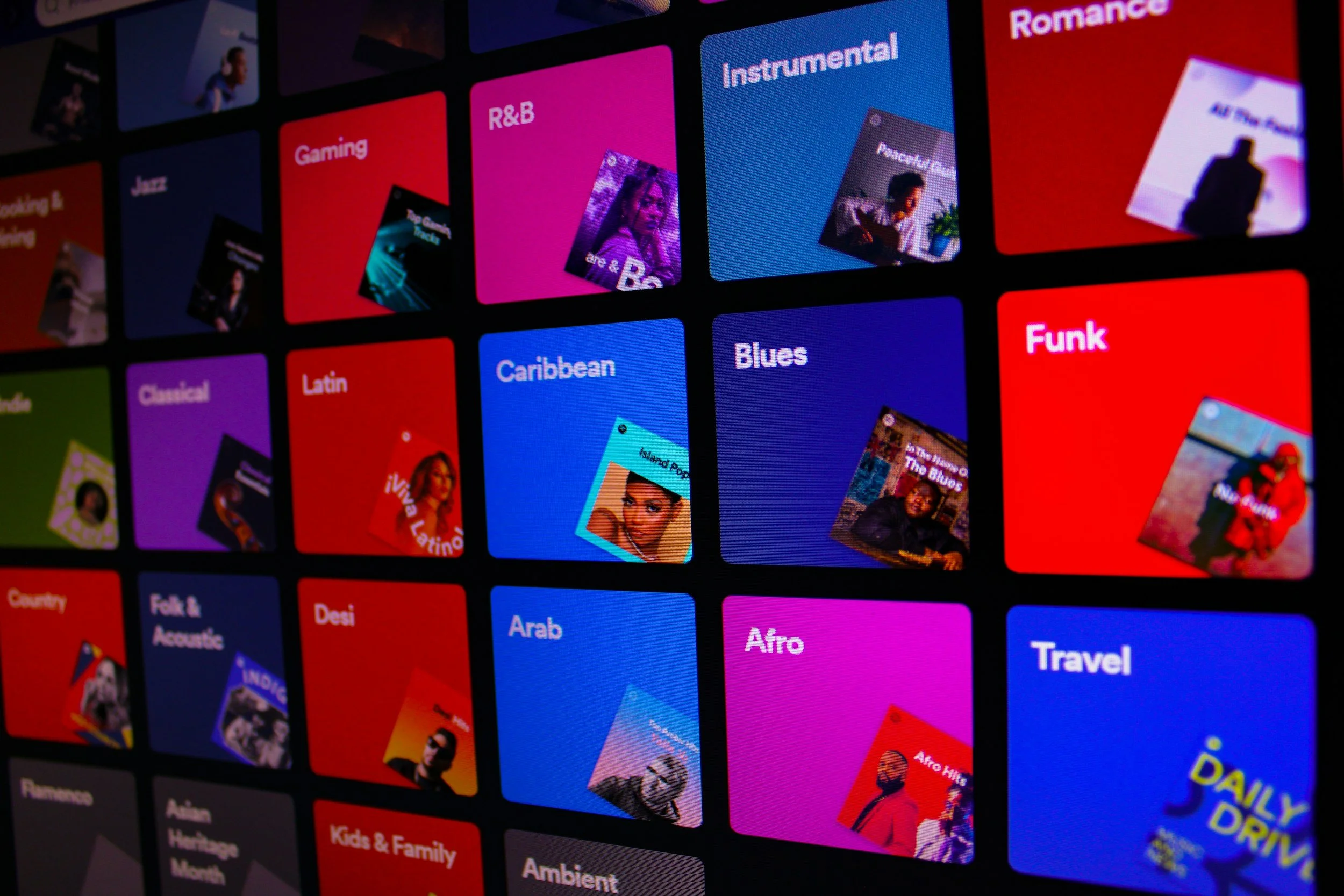
Music has always been filtered. For most of its history, keeping something from an audience required a decision by someone you could name. A radio programmer chose not to play it. A label chose not to sign it. A store chose not to stock it. You could argue with those decisions, route around them, or simply wait. Human gatekeepers were unreliable. They had moods, biases, and occasional moments of genuine belief in things they couldn't explain. The programmer who turned something down on Monday might play something equally challenging on Friday. That unreliability is how things got through.
Now there's no decision. The algorithm doesn't choose to keep anything out. It learns what works and surfaces more of it, automatically, at a scale no person could manage. There's no one to argue with. No bad call to protest. The filtering happens through the accumulated behavior of millions of people, which makes it feel like a natural outcome rather than a choice. And it has no accidents. It doesn't surface the wrong thing by mistake. It doesn't recommend something because someone believed in it enough to take a chance.
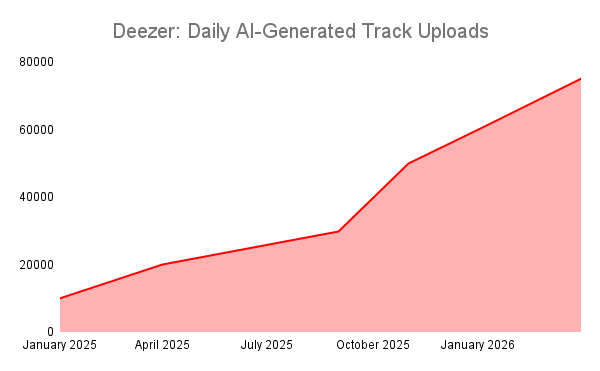
When you understand what the system rewards, the next step becomes obvious: stop making music for people, and start making it for the algorithm. That's what AI music farming is. In January 2025, Deezer detected 10,000 fully AI-generated tracks being uploaded every day. By April 2026 that number was 75,000, accounting for 44% of all new music arriving on the service. These aren't artists. They're operations targeting the algorithm's preferences, optimizing for streams, producing content with no human intention behind it. The logic was already there. AI just made it possible to do at scale, and stripped away the last pretense that the music was for anyone.
Real musicians leave traces. Look up any artist who has been making music for a few years and you'll find a web of connections: who produced their records, who they've collaborated with, what they've sampled, who credits them as an influence. That web exists because music is made in relationship to other music, other people, other moments. You're always reacting to what came before, whether you're honoring it or pushing against it.
For a while, the AI profiles flooding streaming platforms had none of that. One track. No biography, no history, nothing connecting them to any scene or tradition. Easy to spot if you knew where to look. But that window is closing. The more sophisticated operations now generate the trail the same way they generate the music: backstories, collaborators, the whole apparatus of a working artist. Mainstream outlets have picked up some of these profiles and published speculation about whether they're real, not knowing the speculation was part of the operation. The absence is still there underneath. It's just getting harder to find.
None of this harms the individual listener. The person absorbing an AI track on their commute is fine. The harm doesn't work that way. It works slowly, across culture, in a place no one is looking. And it isn't only happening to music.
Culture isn't built from individual choices. It's built from what accumulates in the background without being chosen: the music in the coffee shop, the sound running through a generation's commutes, the songs absorbed without anyone picking them. Those hours build the shared sense of what music can do. Not through any conscious decision, but through what the platform served while people were doing something else. A 2020 study found that Spotify adoption makes listening behavior more similar among listeners, not more diverse. Separate research shows music trending toward shorter, simpler, more uniform structures across genres. The baseline of what music sounds like, and what people expect it to do, has been moving. Most people don't notice because there's no moment when it happens. Just a slow drift in what feels like the default.
Most of what thrives under these conditions is genuinely affecting: songs about heartbreak and loneliness, music that makes the listener feel seen, that names something private and painful in a way that makes you come back to it. Those songs accumulate streams because they work. But they're turned inward. The algorithm rewards personal emotional resonance, the music of individual experience. What it doesn't reward is music turned outward: the song that names something beyond your own life, that asks something of you before it gives anything back, that says something about the world rather than about how the world makes you feel.
The anger hasn't gone anywhere. Neither has the grief, or the political frustration of people who still aren't being heard. If anything, there's more of it now than there was when soul, punk, and hip-hop found the people who needed them. What music provided wasn't the emotion itself. Those experiences were already there. It carried them somewhere. It gave them a shared form, connected people living the same thing in isolation, made private experience feel collective. Over time, that pressure doesn't just shape what people hear. It shapes what gets made. Artists learn what the system will carry and make less of what it won't. The music that knew what to do with it is becoming harder to find, not just in what surfaces, but in what gets made at all.
SOURCES
Deezer flagging 10,000 AI-generated tracks daily (January 2025)
Deezer: AI-generated tracks now represent 44% of all new uploaded music (April 2026)
Knox & Datta — Streaming Services and the Homogenization of Music Consumption (2020)
Songs are getting shorter, thanks in part to Spotify and TikTok algorithms
————————————————————————————————
FURTHER READING
Fairness and Transparency in Music Streaming Algorithms — Music Tomorrow
50,000 AI tracks flood Deezer daily — as study shows 97% of listeners can't tell the difference
